
NASBE’s Annual Conference empowers state board members to leverage their role in advancing education. Attended by state board members from across the nation, along with leading experts, the NASBE Annual Conference is the only conference designed specifically for state board members.
NASBE’s 2026 Annual Conference will be held in person October 26–28, 2026, in Baltimore, Maryland.
Registration is now open for Annual Conference 2026! Don’t miss out—register by September 4 for the best rate!
Register for Annual Conference
We look forward to seeing you at NASBE's 2026 Annual Conference! Registration is now open. Registration rates for 2026 are as follows:
NASBE extends complimentary registration to student board members. Students, please contact the NASBE Conference Team at nasbeconference@thebalcomgroup.com for a special discount code before completing registration.
NASBE Member Rates
- Full Conference: $800 (After September 4, Regular Registration: $950)
- Daily (Monday, Tuesday or Wednesday): $550
- Speaker: $650
- State Night Guest: $75
NASBE Affiliate Registration (NCOSEA and NCSBEE Members)
- NCOSEA: $600
- NCSBEE: $800 (After September 4, Regular Registration: $950)
All Other Registration Rates
- Full Conference: $1,250 (After September 4, Regular Registration: $1,500)
- Daily (Monday, Tuesday or Wednesday): $650
- Speaker: $650
- State Night Guest: $100
Pre-Conference
NASBE offers preconference sessions on Monday, October 26, as part of the full conference registration. These sessions are open to all attendees, though some have limited capacity. If you plan to attend, please select your preferred session during registration.
The 2026 conference will be held at the Renaissance Baltimore Harborplace Hotel.
Renaissance Baltimore Harborplace Hotel (hotel website)
202 E Pratt Street
Baltimore, MD 21202
Attendees are responsible for making hotel reservations.
Attendees are responsible for making hotel reservations. Please call the hotel directly at 410.547.1200 or connect via its online reservation website to make your room reservation. To reserve your room at the special group rate of $209.00 per night plus applicable taxes, you must make your reservation no later than October 5th. After that time, higher rates will apply and rooms may not be available.
Booking your reservation outside of the hotel room block via Internet travel sites or “shopping” for lower rates at nearby hotels has a long-term negative impact on the 2026 Annual Conference. Hotels place financial penalties on organizations for each room not used within their negotiated block of rooms thus making it harder for us to negotiate lower rates for our attendees in the future, which we are committed to doing. By filling the block of reduced rate rooms that we have negotiated, we are able to meet our contractual hotel obligations to avoid any financial penalties to the organization and we are able to use this history as a strong negotiation tool to keep our rates for attendees low year after year. We appreciate your support of NASBE by booking hotel rooms within our official block.
For those using PDA Funds, you must make a reservation using the link above or by phone. NASBE will work with the hotel to pay the charges as directed by your PDA request and the one night's room and tax deposit will be credited.
Professional Development Account funds: If you are planning to use PDA funds, you must make your reservation using the link above or by phone. A credit card is required to hold the reservation. NASBE will work with the hotel to pay the charges as directed in your PDA request, and the one night's room and tax deposit will be credited. Contact Paolo DeMaria with questions.
Attendees are responsible for making their own travel arrangements: The Baltimore-Washington International Airport (BWI) is roughly 12 miles from downtown Baltimore and is a 15- to 20-minute car ride, depending on traffic. Taxis, shuttles, and ride-sharing services are located on the lower level (follow ground transportation signs). Downtown Baltimore is also accessible via Amtrak and MTA Light Rail and bus service. Learn your options and plan your trip here.
Members using PDA funds will be reimbursed for their travel costs after submitting a completed reimbursement form with appropriate receipts. If it is desired to have travel costs paid directly by NASBE from a state’s PDA funds, please contact acctnas@nasbe.org for contact information for NASBE’s travel agency.
We're finalizing session content for this year's program and will update this page as details are confirmed. The schedule below reflects the preliminary agenda; start and end times are firm, though individual session details may still shift.
Monday, October 26 - Preconference
Registration All Day
8:30 am to 5:30 pm Preconference Activities - (Closed Press)
8:30 am to noon School Visit: Commodore John Rodgers School
Start pre-conference day with a visit to Commodore John Rodgers School, a Baltimore City Pre-K–8 school with a compelling turnaround story—from an innovative Pre-K pilot and full-inclusion model to promising math gains, many tied to priorities in Maryland's Blueprint for the Future. The visit includes a tour of the school and reflection with the principal, teachers, and students.
Noon to 1:00 pm Lunch for preconference attendees.
1:00 pm to 4:30 pm Preconference Sessions: (1) Education Technology/AI in Education and (2) Mathematics Education (limited participation)
Navigating the Noise: Tackling EdTech, Screen Time, and AI through State Policy
Classroom technologies—and the debates on their value—are advancing faster than policy, and state boards of education face difficult questions: What does the evidence say about education technology? Where is the line between purposeful and unstructured screen time? How can we govern AI use without stalling innovation. This preconference session convenes researchers, practitioners, and state board members to compare policy and legislative approaches, foster peer learning, and work through shared challenges in a candid space. Attendees will leave with practical strategies grounded in research and real-world implementation as well as build a community of peers to keep learning after the session ends.
Improving Student Achievement in Mathematics: A Workshop for Planning and Action
Many states have made significant strides to address reading gaps by embracing the science of reading; now, policymakers are turning toward mathematics. This preconference session brings together experts and state leaders to examine what comprehensive, state-level math improvement looks like in practice. Attendees will explore the key elements that anchor effective math initiatives, from building a culture that believes every student can succeed in math to ensuring high-quality instructional materials reach every classroom. The session will include dedicated work time for state board members to assess their own policy contexts, identify priority areas, and leave with a concrete plan for actions.
4:45pm – 6:00 pm Board of Directors Meeting (Closed Press)
6:00pm – 8:00pm Welcome Reception
Join NASBE Board Chair Byron Ernest to kick off the 2026 Annual Conference. Enjoy light fare, cocktails, and oyster shooters (Byron's favorite!) as you reconnect with old friends and welcome new ones to Baltimore. At Phillips Seafood, just a few blocks from the hotel. Special thanks to our sponsor, Cognia, for hosting this event.
Tuesday, October 27
Registration All Day
7:45 am – 8:45 am Networking Breakfast
8:45 am – 9:30 am Conference Welcome
9:30 am – 10:45 am Opening General Session/Keynote
Keynote by Leon Smith, the 2026 National Teacher of the Year
Leon Smith, the 2026 National Teacher of the Year, believes every student is capable of more than they can see in themselves. Known for his "warm demander" approach, pairing high expectations with genuine care, Smith has spent two decades at Pennsylvania's Haverford High School building classrooms rooted in belonging, critical thinking, and civic engagement. In this keynote, Smith brings that same energy to state board members with a candid, moving conversation about what it takes to unlock potential in every student and prepare them for engaged citizenship.
10:45 am – 11:00 am Break
11:00 am – 12:00 pm Concurrent Sessions
Strengthening Preparation and Retention for Early-Career Teachers: Lessons from California and Texas: A well-prepared, stable teacher workforce is the backbone of any effective educational system. Yet states continue to struggle with teacher shortages, especially in high-need fields and communities. Leveraging lessons from California and Texas, this session will tackle two critical approaches to improving retention among early-career teachers—preservice clinical preparation and mentorship—and highlight policy mechanisms to support them.
Creating the Conditions for Effective, Scalable, Sustainable Career Education in Indiana: Indiana redesigned its high school diploma requirements to better connect students with their selected postsecondary pathways, and the Indiana State Board of Education revised its accountability model in March 2026 to reflect a shared commitment to preparing students for lifelong success. These policy changes led Indiana Pork to pilot a Work-Based Learning for Agriculture Program to help address labor shortages among Indiana pork producers and pork-related industries. Developed in eight counties, the program collected and analyzed data through a partnership with Ascend Indiana that informed its statewide expansion.
You Have a Student Board Member: What’s Next? Creating student board member positions is only a first step toward meaningful student engagement. Led by the National Student Board Member Association, this session explores how boards can build systems, relationships, and board cultures that empower student board members to contribute authentically and effectively. Panelists will examine what shapes successful student board member programs and share emerging trends, common challenges, and promising practices across diverse governance contexts. Attendees will also hear directly from student board members about their governance roles.
12:00 pm – 12:15 pm Break
12:15 pm – 1:30 pm Networking Lunch and Author Keynote
Wowful Leadership: Service, Character, and Presence
Everyone is a leader—emulated as a role model, coach, and navigator of engaging projects, teams, and activities. In this keynote talk on his book Mere Leadership, Dr. Byron Ernest defines “wowful leadership,” which he characterizes as consistently inspiring and exceeding expectations and leaving a lasting impact on those being led. To be a “wowful” leader is to accept responsibility for leading from where one is and moving from intention to impact, asserts Ernest, longtime member of the Indiana State Board of Education and current chair of the NASBE board. State board members in this session will be challenged to reflect on their own leadership and reach forward.
1:30 pm – 1:45 pm Break
1:45 pm – 2:45 pm Concurrent Sessions
Beyond the Ban: Smarter K-12 Screen Time Policies: State leaders across the country are pursuing legislation to limit or ban screen time in K–12 schools. Their proposals raise complex questions about student well-being, academic outcomes, digital access, and workforce readiness. As they debate the role of technology in classrooms, state board members need balanced, research-informed perspectives to guide thoughtful decisions. Panelists will address how to move beyond quantity to focus on the quality of educational technology.
The Principal Effect: How to Strengthen School Leadership with Smart Policies: Policymakers often address school improvement one challenge at a time, with separate strategies for teacher retention, chronic absenteeism, school climate, and student learning. But this fragmented approach can overlook what research increasingly makes clear: Effective principals influence all of these outcomes, and their influence is especially significant in the schools and communities that need it most. Dr. Linda Darling-Hammond will share findings from the Learning Policy Institute’s new report, The Principal Effect, and connect them to state policy levers that can help recruit, prepare, support, and retain effective school leaders. Practitioners from Baltimore City Public Schools illustrate what those findings can look like in action.
How Georgia Increased Enrollment through Innovative Learning Models: Georgia public school enrollment is projected to decline by approximately 2 percent by next year. The dip reflects demographic trends, such as declining birth rates, as well as shifts in how families access education. In response, the Georgia State Board of Education and Department of Education are helping districts use existing flexibilities to create innovative, learner-centered models that deepen engagement and strengthen family connection. This session will offer concrete ideas for providing state-level support for innovation that can increase enrollment.
2:45 pm – 3:15 pm Networking Break
3:15 pm – 4:30 pm General Session
4:30 pm – 4:45 pm Break
4:45 pm – 5:45 pm Area Meetings (Central, Northeast, Southern, Western) (Closed Press)
7:00 pm – 9:00 pm State Night: Dinner and Reception (Closed Press)
This year, State Night will be held off-site at the Baltimore National Aquarium.
Wednesday, October 28
Registration All Day
7:30 am – 8:45 am Day Two Welcome, Networking and Awards Breakfast
8:50 am – 9:50 am Morning General Session
Implementing the Blueprint for Maryland's Future: The Blueprint for Maryland's Future represents one of the nation’s most ambitious and comprehensive education reform efforts. Designed to transform public education through investments in early childhood education, teacher career pathways, college and career readiness, equitable resource distribution, and governance and accountability, the blueprint has entered a critical phase of implementation. Panelists will share how state leaders, local school systems, educators, policymakers, and community stakeholders are translating this vision into meaningful outcomes for students. Attendees will gain practical lessons that can inform other large-scale, sustainable education transformation initiatives.
9:50 am – 10:00 am Break
10:00 am – 11:00 am Concurrent Sessions
Science of Reading in the States: Progress, Gaps, and What Boards Can Do Next: At least 40 states have passed science of reading laws, but has classroom instruction changed much? Findings from a Thomas B. Fordham Institute survey are encouraging and sobering: Progress is real but uneven. Teachers in high-poverty schools lag roughly 10 percentile points behind their peers in knowledge of and commitment to science of reading instructional practices—a gap that persists even when those teachers report more exposure to aligned training. Meanwhile, only one of 18 state policy levers showed a statistically significant association with deeper teacher knowledge. And preservice training, far from helping, appears to be actively harmful. Researchers and board members will offer perspectives on what the data means in practice and what state boards can do to close gaps.
State Strategies for Improving Student Attendance: Rates of chronic absenteeism increased significantly during and after the pandemic, undermining efforts to address students’ academic, social, and emotional needs. While these rates have declined more recently, progress has been slow. Attendees will learn how drivers of chronic absenteeism have shifted in recent years and effective state-level strategies for improving attendance. Panelists will highlight actions state boards can take: use attendance data effectively for regular monitoring and in state accountability and improvement systems and build the capacity of districts to select and implement evidence-based strategies.
Preparing Teachers for the Age of AI: How State Policy Can Move from Guardrails to Real Support: Amid the heightened national conversation around AI in education, teachers are caught in a whirlwind of AI tools, sweeping technology regulations, unclear guidance from state and district leaders, and competing political and community pressures. This interactive session will explore how state boards can build the conditions for responsible, effective, equitable AI use through policy, professional learning, credentialing, and classroom innovation. Drawing on lessons from Louisiana and Colorado, panelists will discuss how state leaders can navigate political headwinds and support teachers while focusing on student learning and instructional quality.
11:00 am – 11:10 am Break
11:10 am – 12:10 pm Concurrent Sessions
We Are All Math People: Developing Illinois’s Statewide Numeracy Plan: On the heels of a successful Comprehensive Literacy Plan in 2024, the Illinois State Board of Education approved a Statewide Numeracy Plan in June 2026, a blueprint for making math attainable for all children. The plan seeks to build a true understanding of math concepts at all grade levels and includes supports for teachers and administrators. This session will sketch out a process any state can adopt, including timelines, feedback loops, final product, dissemination, and next steps.
Why Child Care Is State Boards’ Business: Policy conversations around child care often focus on adult needs: workforce support, private investment, affordability, and kindergarten readiness. Rarely do these conversations center the experiences that help young children grow and develop. Starting from the place of what children need, what families want for their children, and which experiences public systems should fund, this session explores how state boards can use policy, governance, and cross-system collaboration to advance these experiences coherently and appropriately.
Centering Educator Voice in Content Standards Adoption: A Tennessee Spotlight: Most state boards approve academic content standards, which drive classroom instruction, curriculum and material selection, and student assessments. Therefore, educators and the diverse needs of communities should drive the process of developing the standards. Tennessee’s review process encompassed the recruitment and selection of educator advisory teams, public feedback surveys, and educator work sessions before state board approval. The session will give attendees an opportunity to reflect on their own standards reviews and how they can collaborate to strengthen stakeholder voice.
12:10 pm – 12:20 pm Break
12:20 pm - 2:00 pm Closing Lunch, General Session, and Gavel Passing
A Future Worth Building: State Strategies for Transforming High School: Warning signs are flashing at the traditional high school: declining enrollment, stubbornly high rates of chronic absenteeism, and questioning by students and families about the value of the diploma. State board members and other leaders from California, Kentucky, and Indiana—part of NASBE’s High School Transformation State Network—will share how high school redesign can better serve students and the future workforce. Drawing on findings from a NASBE report, panelists will discuss what they have learned: 1) how cross-agency governance can align partners around a shared vision, 2) how accountability systems and graduation requirements can value durable skills alongside academic content, and 3) how new forms of evidence of student skills can win the trust of employers and colleges.
2:00 pm Conference Concludes
Note: Different from previous years, the Delegate Assembly will be held virtually following the conference on October 30, 2026.
We are pleased to announce that Leon Smith, the 2026 National Teacher of the Year, will join as a keynote speaker for this year's Annual Conference!
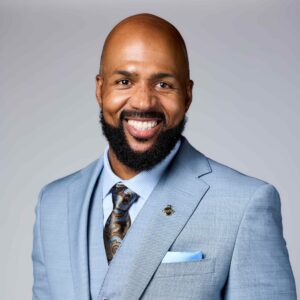
Leon Smith, the 2026 National Teacher of the Year, serves Pennsylvania's Haverford High School as an Advanced Placement (AP) United States history and AP African American studies teacher, emphasizing critical thinking, civic engagement and creating spaces for students to find their voices and flourish. Smith has more than two decades of experience as an educator, leader and mentor. He believes students are most successful when their classrooms foster connection — whether it's through a morning circle, individualized feedback or engaging lessons, students feel confident to meet high expectations because Smith sees in them what they can't always see in themselves.
Smith teaches students how to think critically, creating opportunities for them to contend with complex ideas and big questions with dignity and curiosity. It was listening to his students that became the catalyst for bringing the first-ever AP African American studies course to Haverford.
Smith is also deliberate in connecting students with community. As part of AP Advocacy Day, he takes students to the Pennsylvania State Capitol to interact with AP scholars from across the state and meet with local legislators, building empathy and understanding through storytelling and civic engagement. His leadership extends to championing the recruitment and retention of teachers, including creating an Educators Rising chapter at his high school so students can begin to see themselves as teachers too.
Above all, he carries the belief that "it is a great power to be in education; it's something we should have a reverence for."
Smith earned a Bachelor of Arts in secondary social studies education from the University of Maryland at College Park, a Master of Education in instructional systems from Pennsylvania State University and a PK–12 principal certification from Cabrini University.
Additional Speakers Include:
- Diana Arellano, Eastern Hancock High School, Indiana
- Scott Bess, Indiana State Board of Education
- Hedy Chang, Attendance Works
- Linda Darling-Hammond, California State Board of Education and Learning Policy Institute
- Paolo DeMaria, NASBE
- Michael Deurlein, Tennessee State Board of Education
- Matt Donaldson, Georgia State Board of Education
- Tracey Durant, Baltimore County Public Schools
- Nathan Ehrenberg, DC State Board of Education
- Byron Ernest, Indiana State Board of Education and NASBE Chair
- Brian Fitzpatrick, Fordham Institute
- Haley Graf, Indiana Pork
- Beth Holland, Full Scale Learning
- Steven Isoye, Illinois State Board of Education
- Keith Krueger, CoSN
- Donna Leak, Illinois State Board of Education
- Courtney Boswell MacDonald, Texas State Board for Educator Certification
- Chad Martin, Indiana Pork
- Joshua Michael, Maryland State Board of Education
- Sara Heyburn Morrison, Tennessee State Board of Education
- Patricia Nugent, Illinois State Board of Education
- Susan Patrick, Learning Policy Institute
- Celina Pierrottet, NASBE
- Ali Reid, Tennessee State Board of Education
- Michelle Rojas, Gates Foundation
- Ron Sandlin, Indiana Department of Education
- Breanna Sommers, Tennessee State Board of Education
- Tyler Thigpen, Institute for Self-Directed Learning
- Maureen Tracey-Mooney, FutureEd
- Susan Walker, Georgia Department of Education
- Rebecca Wolfe, Threadwell Solutions
- Carey Wright, Maryland State Superintendent of Education
- Abby Wu, Washington State Board of Education
- Lorena Wu, Maryland State Board of Education
- Audrey Young, Texas State Board of Education
- Lu Young, Kentucky State Board of Education
Note: The Annual Conference Call For Proposals ended May 26. We are reviewing all session proposals now. The session lead will be notified by July 20, 2026, if their presentation proposal is selected. If you have any questions about the process, please contact Renee Lang or Joey Hedger.
What Is the NASBE Annual Conference?
NASBE’s Annual Conference empowers state board members to leverage their role as citizen leaders in education. Attended by state board members from across the nation, it is the only conference designed specifically for state board members. Attendees will have the opportunity to learn from renowned subject-matter experts and reflect on how the information shared can help state boards lead during this pivotal time in public education, analyze research, evidence, and policy solutions that the state board can bring to bear on pressing challenges facing public education, gain insight into how state boards can leverage their role in the education ecosystem to improve student outcomes, and build relationships with peers in other states with whom they can share approaches for improving state education systems.
Who Attends?
The conference typically draws 150–200 attendees, most of whom are state board members. State education agency staff, advocates, researchers, policy experts, press, nonprofit representatives, and NASBE funders also attend. The NASBE conference is a tremendous opportunity to connect state education leaders, experts, and practitioners.
What Makes a Successful Session?
Board members are keen on learning the “why” and “how” behind policy changes and hearing directly from policymakers and practitioners engaged in the work. They value dynamic, interactive sessions that highlight multiple perspectives (including student and teacher voices) and provide strong evidence and concrete examples of best practices and action steps. Sessions led by or featuring state board members alongside researchers or other experts are also highly valued.
If you would like help in connecting to state boards actively engaged in policy discussions relevant to your proposed session, please contact us.
NASBE conference evaluations consistently give their highest ratings to interactive, engaging sessions on a relevant topic or problem of practice. We encourage you to incorporate a “turn and talk” to your session, where participants briefly discuss a specific topic with their neighbors, a small-group problem-solving exercise, panel reflections, or audience polling.
State boards expect respectful, nonpartisan exchanges at our conference; all session presenters should strive for a collaborative, open, nonideological tone.
What Types of Sessions Are Offered?
The NASBE Annual Conference encompasses a variety of session formats to meet members’ needs, with most lasting no more than 60 minutes. NASBE will match your session proposal to the appropriate format and time frame.
What Topics Are State Boards Eager to Learn About?
Each year, NASBE surveys state board members to identify the most pressing issues on state board agendas in order to help frame the conference agenda. Proposals should align with at least one of the following strands, which reflect broad state board priorities. NASBE encourages crosscutting proposals that address multiple strands. Proposals that do not address any of these strands will not be considered.
- Artificial Intelligence and Education Technology
- Assessment and Accountability
- College and Career Readiness
- Curriculum and Instructional Materials
- Early Childhood and Elementary Education
- Education Governance and Boardsmanship
- Educator Recruitment, Retention, and Support
- High School Transformation
- Literacy
- Numeracy/Mathematics Education
- School Improvement Strategies
- Student Well-Being
What Are Proposer and Presenter Responsibilities?
Proposers of an accepted session must register all individuals who are delivering the session at the NASBE Annual Conference. Costs associated with attending—registration, travel, lodging, and meals—are the proposer’s responsibility. For the 2026 Annual Conference, NASBE offers a reduced registration for presenters ($650). To encourage student voices in education policy discussions, students who present or attend the conference will receive complimentary registration. Presenters are not provided with honoraria. For special circumstances, NASBE may, at its sole discretion, waive or reduce registration fees for a presenter if the cost of attending creates a hardship for the proposer.
Presenters are expected to provide presentation materials in digital form, handouts, and/or follow-up materials for participants before, during, or after the event. NASBE staff may edit session titles and descriptions for clarity. Proposers and presenters will work with an assigned NASBE staff member before the conference to refine the session and ensure its success.
When Are Proposals Due?
Proposals must be submitted to our online platform by May 26, 2026. Proposers will be notified by July 20, 2026, whether their proposals have been selected. Preview the form here.
How Are Proposals Selected?
The process is highly competitive. Less than 30 percent of submitted proposals are selected. For 2026, there are approximately 12 to 15 available slots on the conference agenda.
NASBE’s Conference Planning Committee and staff evaluate proposals based on these criteria:
- relevance to priority strands that also feature the actual work of state boards of education;
- session quality and qualifications of presenters and panelists;
- clear format and flow with that intentionally engages state board members and other audience participants in discussion.
In sum, we seek a productive exchange of diverse perspectives that can create lasting channels for sharing evidence-based strategies and solutions. Submitters are encouraged to collaborate with their partners and state leaders to develop proposals that include diverse presenters and leverage a range of policy, practice, and research expertise. Sessions focused on one vendor’s product or service are discouraged, as are proposals with a strong ideological bent. Given the limited number of slots, accepted sessions featuring a presenter or group of presenters from a single organization will be limited to one per organization. Find last year’s agenda and sessions here.
NASBE offers multiple ways to partner at our premier membership meeting, the NASBE Annual Conference. Please contact NASBE President and CEO Paolo DeMaria to learn more about becoming a NASBE sponsor.
Programmatic Funders:
- Arizona State University
- The Bainum Family Foundation
- Charles and Lynn Schusterman Family Philanthropies
- The Wallace Foundation
- The William and Flora Hewlett Foundation
- W.K. Kellogg Foundation
Premier Sponsors:
- American Institutes for Research
- College Board
- Curriculum Associates
- HMH-NWEA
- ETS
- Great Minds
Conference Sponsors - Gold
- This could be you! Learn more by contacting Paolo DeMaria
Conference Sponsors - Silver
- This could be you! Learn more by contacting Paolo DeMaria
Conference Sponsors - Bronze
- This could be you! Learn more by contacting Paolo DeMaria
How much is conference registration?
Registration fees for Annual Conference 2026 are as follows:
NASBE Member Rates
- Full Conference: $800 (After September 4, Regular Registration: $950)
- Daily (Monday, Tuesday or Wednesday): $550
- Speaker: $650
- State Night Guest: $75
NASBE Affiliate Registration (NCOSEA and NCSBEE Members)
- NCOSEA: $600
- NCSBEE: $800 (After September 4, Regular Registration: $950)
All Other Registration Rates
- Full Conference: $1,250 (After September 4, Regular Registration: $1,500)
- Daily (Monday, Tuesday or Wednesday): $650
- Speaker: $650
- State Night Guest: $100
NASBE also extends complimentary registration to student board members. Students, please contact the NASBE Conference Team at nasbeconference@thebalcomgroup.com for a special discount code before completing registration.
I don’t want to attend the whole conference. Can I register for only the pre-conference sessions or a single day?
Yes. If you want to attend only one day of the Annual Conference, please select “single day registration” when you register for the day you plan to attend. For NASBE members, the fee is $550, for non-member, the fee is $650.
Do I have to register separately for the evening events?
No, it is included in your full conference registration. If you opt to bring a guest, there is an extra fee of $75 for members, and $100 for non-members.
Does NASBE make my hotel reservation?
Attendees are responsible for making hotel reservations. Unfortunately, the hotel block for our Annual Conference has sold out at our conference rate. There are varying rates and availability at the hotel directly through their website. We have compiled a list of nearby hotels for you that also have varying rates and availability.
- Hampton Inn and Suites Baltimore Inner Harbor | 0.2 miles, 3-minute walk
- Staybridge Suites Baltimore – Inner Harbor by IHG | 2 miles, 3-minute walk
- Hyatt Regency Baltimore Inner Harbor | 0.3 miles, 6-minute walk
- The Royal Sonesta Harbor Court Baltimore | 0.4 miles, 8-minute walk
- Baltimore Marriott Waterfront | 0.7 miles, 13-minute walk
- Hilton Garden Inn Inner Harbor | 0.7 miles, 13-minute walk
- Homewood Suites Hilton Baltimore| 0.7 miles, 13-minute walk
- Courtyard by Marriott | 0.8 miles, 15-minute walk
How far away is the hotel from the airport?
The hotel is about 12 miles (15-20 minutes) from the airport, depending on traffic. Taxis, shuttles, and ride-sharing services are all available. Downtown Baltimore is also accessible via Amtrak, and MTA Light Rail and bus service.
How do I access “PDA” funds for NASBE’s annual conference?
NASBE Professional Development Accounts (PDA) provide support to state board members who wish to participate in NASBE activities such as attending conferences, regional meetings, travel and other related activities. It is a perfect way to fund your trip to NASBE’s Annual Conference 2026! If your state has set up a PDA with NASBE, individual members may use available funds. Please contact Paolo DeMaria for more information.
How are you keeping attendees safe during the conference? (COVID-19 Policy)
Your well-being is our top priority, and we are committed to providing a safe and welcoming environment at the 2026 NASBE Annual Conference.
We ask all participants to monitor their own health before attending. If you are feeling unwell, please take the necessary steps to recover—whether that means staying home to rest or wearing a mask to protect yourself and others at the conference.
What is your cancellation policy?
Registrations may be cancelled for a refund (less $100 processing fee) if cancellation request is received in writing by Friday, October 2, 2026. All cancellations must be submitted in writing and emails to nasbeconference@thebalcomgroup.com.
Registration substitutions are accepted. The substitution deadline is Friday, October 2, 2026. All substitutions after this date will be processed on-site. Please email substitution requests to nasbeconference@thebalcomgroup.com.
All refunds are issued via original form of payment after the conference.
Are there sponsorship or advertising opportunities during the conference?
Yes! If you are interested in becoming a NASBE annual conference sponsor, please contact Paolo DeMaria.
I submitted a conference proposal. When will I hear and what's next?
The Conference Planning Committee and NASBE staff is currently reviewing all proposals based on the following criteria:
- relevance to priority strands that also feature the actual work of state boards of education;
- session quality and qualifications of presenters and panelists;
- clear format and flow with that intentionally engages state board members and other audience participants in discussion.
Those who submitted a proposal will be notified by July 20, 2026, if their presentation proposal is selected for the conference. Once the session is confirmed, you will be assigned a NASBE staffer to help guide your further planning and logistics.
Coming Soon!